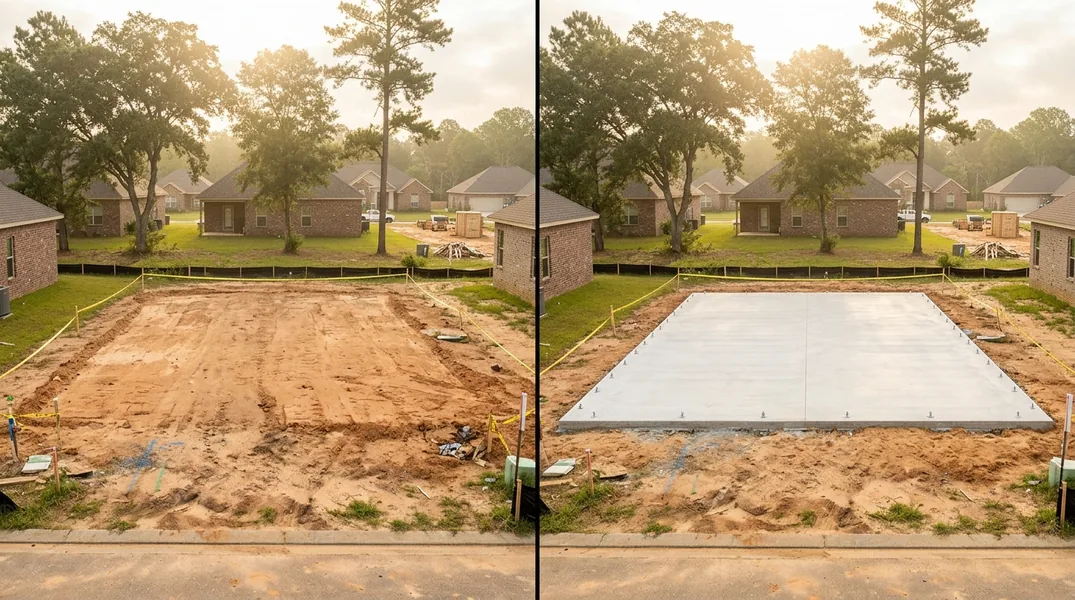
Understanding New Construction Concrete Slabs in Mobile, Alabama
Purchasing a new construction home in Mobile is an exciting milestone, but it comes with responsibilities that many first-time buyers overlook. One of the most critical components of your new home is the concrete foundation slab, yet it rarely receives the attention it deserves during the closing process. Whether your new build sits in Mobile proper or in nearby communities, understanding what lies beneath your home can save you thousands in repairs down the road.
A concrete slab serves as the foundation for your entire home, bearing the weight of walls, floors, and everything inside. In the warm, humid climate of Alabama, concrete slabs face unique challenges including moisture intrusion, thermal expansion, and settling issues. Unlike homes built on pier-and-beam foundations, slab homes require specific attention to drainage, soil preparation, and finishing quality. Before you sign closing documents, you need to know whether your builder followed proper standards and whether the slab will perform reliably for decades to come.
What to Look for During Your Builder Foundation Inspection
A thorough builder foundation inspection is non-negotiable when purchasing a new construction home. Most builders will allow a licensed inspector to examine the slab before closing, and this step can reveal problems that aren't visible to the untrained eye. Start by walking the entire perimeter of the slab, looking for cracks wider than a quarter-inch or any signs of uneven settling. Minor hairline cracks are normal and expected as concrete cures, but larger cracks, especially those that run diagonally or show patterns, may indicate poor concrete mix design or inadequate soil preparation underneath.
Pay close attention to the slab's surface elevation and slope. A properly constructed slab should be level where it needs to be level, such as in living areas and bedrooms, while other sections should slope gently away from the home's perimeter to encourage water drainage. If you notice low spots or areas where water pools after rain, this is a red flag that drainage wasn't properly considered during construction. Additionally, inspect the perimeter for any visible cracks in the stem wall or foundation edge. Ask your builder or inspector about the concrete's air entrainment, which is the intentional addition of tiny air pockets that help concrete resist freeze-thaw cycles, even in Mobile's mild winters.
New Home Slab Drainage: Why It Matters More Than You Think
Proper drainage around a new construction concrete slab is absolutely essential in Alabama's climate. The ground beneath and around your slab must be engineered to move water away from the foundation, not toward it. Poor drainage is one of the leading causes of concrete damage, moisture problems in crawl spaces, and even structural issues over time. Before closing, verify that the builder installed a functional drainage system, including perimeter gravel or French drains, proper grading away from the foundation, and, if applicable, interior vapor barriers beneath the slab.
The soil composition matters tremendously for slab performance. Expansive clay soils, common in parts of Alabama, can shift dramatically with moisture changes, causing the slab to crack or settle unevenly. A quality builder will have conducted soil testing and adjusted the slab design accordingly, perhaps by adding additional reinforcement or thickening the slab in problem areas. During your inspection, ask whether the builder used a moisture barrier beneath the slab and whether they installed perimeter insulation to protect against temperature fluctuations. These details might seem technical, but they directly impact how your slab will perform over the next 30 years. If you have concerns about drainage or want a professional assessment, Mobile Concrete Pros can provide expert guidance on your new construction slab's long-term viability.
Common Defects in New Construction Concrete Slabs and Red Flags
Even with reputable builders, defects in new construction concrete slabs do occur. Understanding what to watch for helps you catch problems before closing. One common issue is improper concrete curing, which happens when concrete is poured in extreme heat or cold without adequate protection. If the slab was poured during hot weather without proper curing procedures, the concrete may have weak surface layers that will dust or spall prematurely. Similarly, if concrete was poured on frozen ground or in freezing temperatures without protection, internal damage may develop that won't be visible for months or years.
Another red flag is the presence of efflorescence, which appears as a white powdery residue on the concrete surface. While efflorescence itself isn't dangerous, it signals that water is moving through the concrete, which indicates a moisture problem. Uneven coloring or blotchy patterns on the slab surface can indicate inconsistent concrete quality or poor finishing practices. Finally, watch for any evidence of the builder cutting corners on reinforcement. If you notice the slab is unusually thin, lacks visible rebar, or shows signs of inadequate compaction (soft spots or areas that deflect under pressure), these are serious concerns worth discussing with your inspector or a concrete specialist before closing.
Questions to Ask Your Builder Before Closing on Your New Construction Home
Don't be shy about asking detailed questions regarding your new construction concrete slab. Reputable builders expect and welcome scrutiny because they stand behind their work. Ask for documentation of soil testing, concrete mix design specifications, and the date and conditions under which the slab was poured. Request copies of any structural engineer's reports or foundation certifications. Ask whether the concrete was air-entrained and what the specified compressive strength was. These technical details demonstrate whether the builder invested in quality materials and proper engineering.
Inquire about the warranty on the slab and what it covers. Most builders offer a one-year structural warranty, but specifics vary. Ask whether the warranty covers cracks, settling, or moisture intrusion, and what the process is for filing a claim if problems develop. Find out what maintenance the builder recommends, such as sealing the slab or managing moisture in crawl spaces. Finally, ask for the contact information of the concrete contractor who poured the slab, in case you need technical information later. If you're purchasing in Mobile and want an independent expert opinion on your slab's condition, don't hesitate to reach out to Mobile Concrete Pros at (251) 620-5902 for a professional assessment.
Protecting Your Investment After Closing
Once you've closed on your new construction home and identified any slab issues, the next step is prevention and maintenance. Apply a quality concrete sealer to your slab within the first year to protect against moisture intrusion and staining. Maintain proper grading around your home to ensure water continues to drain away from the foundation, and keep gutters and downspouts clean and functioning. Monitor your slab over the first year for any new cracks or settling, and document any changes with photos and dates. Most minor issues that will develop do so within the first 12 months, so vigilance during this period is valuable.
If you notice significant cracks, uneven settling, or moisture problems after closing, contact your builder's warranty department immediately. Many issues are covered under the builder's warranty if reported within the specified timeframe. For ongoing maintenance or if you need repairs to concrete surfaces around your home, such as Concrete Patios or driveways, Mobile Concrete Pros offers Concrete Repair & Resurfacing services to keep your property in top condition. Whether you're dealing with a new construction issue or planning future concrete improvements, we're here to help. Call us at (251) 620-5902 or visit our website to request a free estimate for any concrete work around your new home.
Looking for a professional concrete contractor in Mobile? Mobile Concrete Pros responds fast for all your concrete needs.
Get a Free QuoteOur services: Concrete Driveways · Concrete Patios · Stamped & Decorative Concrete